HiveMind
Written on December 20th, 2025 by Tess Gaston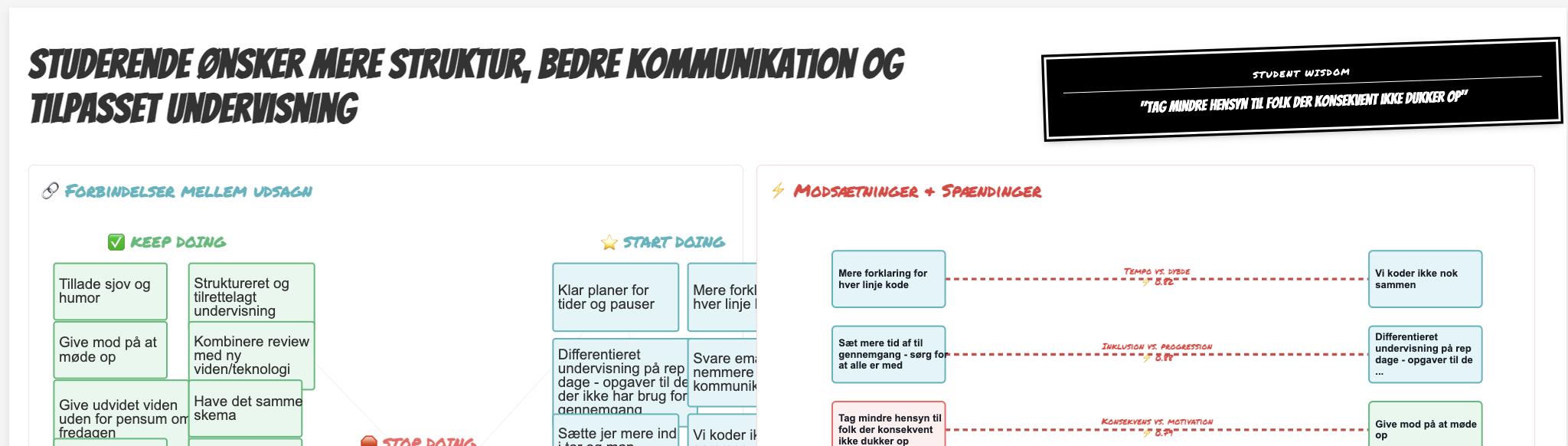
As a lecturer at Business Academy Copenhagen, where I teach on the AP degree programme in Computer Science, we have a delpi evaluation each semester.
The Delphi method is a structured way of gathering and refining group opinion through iterative rounds, originally developed for expert forecasting but widely adapted for evaluation purposes.
The core idea is to reach a considered group consensus without the social pressures of a face-to-face meeting — where dominant voices, status, or groupthink can distort what people actually think. It is particularly useful for evaluating something where there is no single right answer, such as the quality of a course, a process, or a shared experience.
After a Delphi or Dare-Share-Care evaluation session, you end up with a large volume of unstructured student responses — observations, concerns, suggestions — spread across many groups. Reading and synthesizing all of that manually is time-consuming, and patterns that span multiple groups are easy to miss.
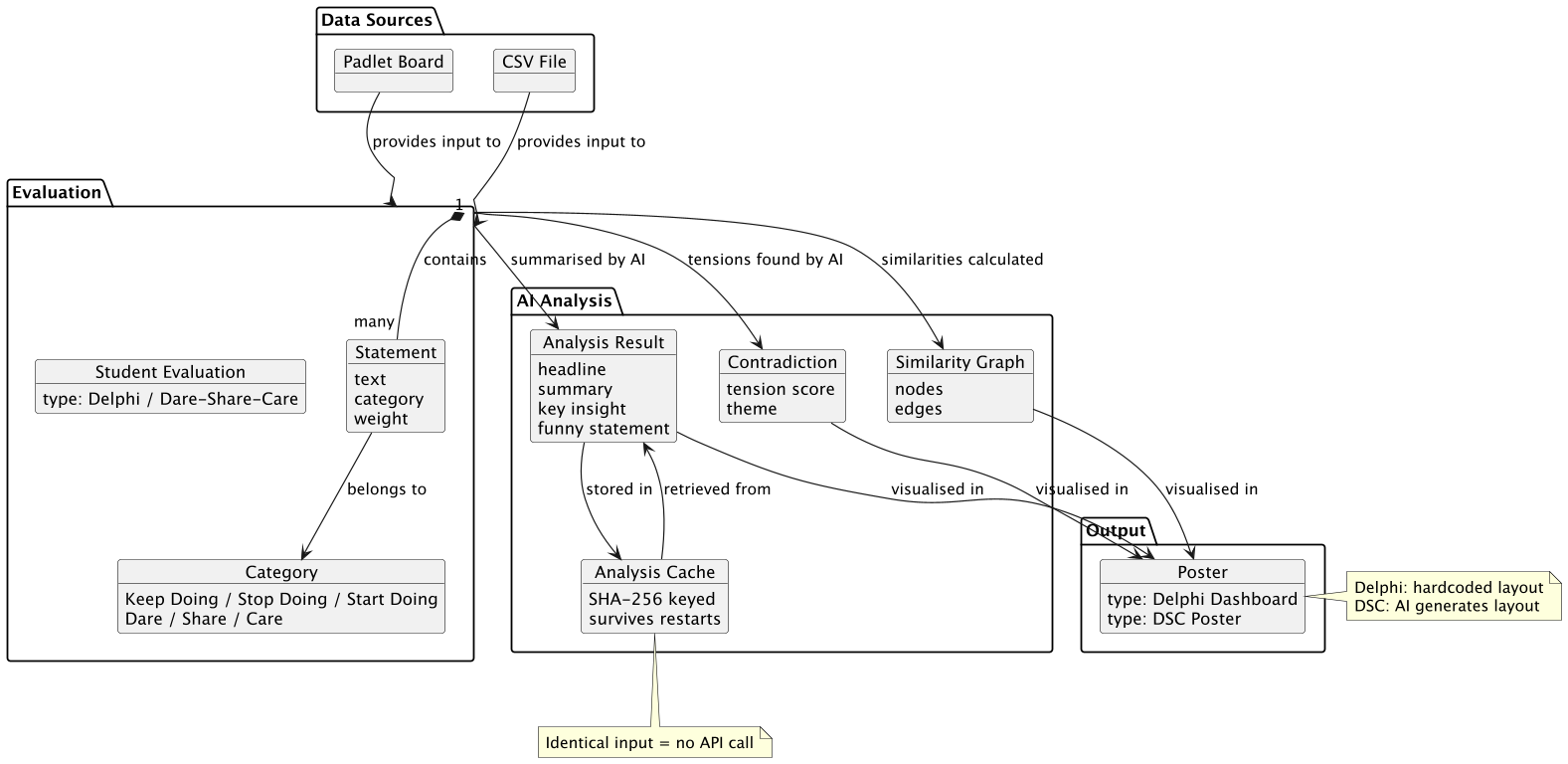
HiveMind addresses this by taking the raw evaluation data and passing it through the Claude API, which generates structured HTML summaries for each group. Each summary includes a contradiction analysis — surfacing cases where students within a group hold opposing views — and concrete recommendations directed at the teacher. The output is designed to be readable at a glance, more like a poster than a report.
The integrations reflect where the data already lives and where teachers work: Padlet for collecting student input, Miro as a visual collaboration space, and Claude as the analytical engine in the middle.
The broader purpose is to shift the teacher’s relationship to evaluation data — from passive recipient of a comment dump to someone with a synthesized, prioritized picture of what each group actually experienced — without requiring hours of manual reading.